

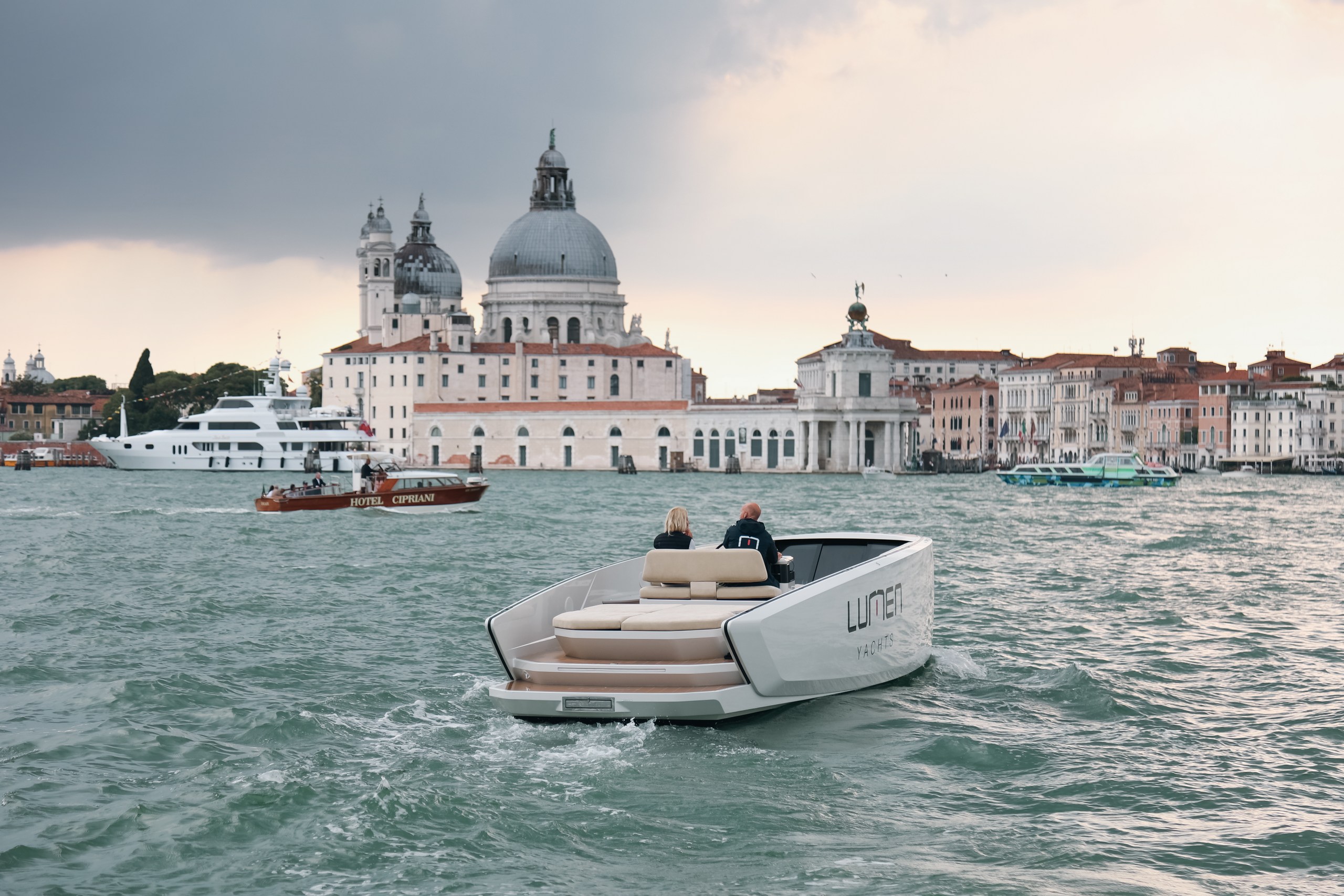
6,000 km of navigable waterway. Frisian lakes, Amsterdam canals, the Biesbosch — Dutch water at its finest, explored in silence.
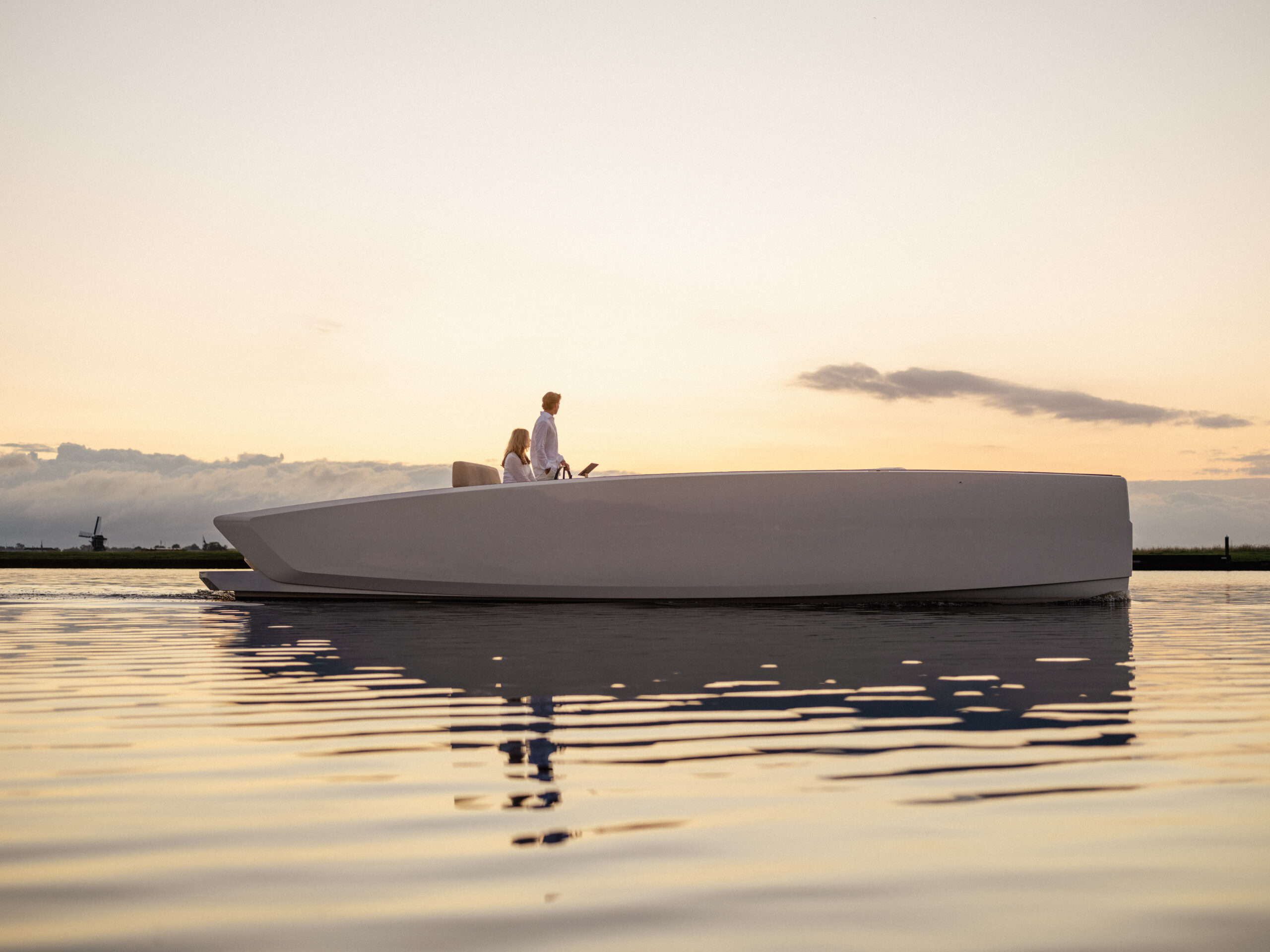
LUMEN is built in Friesland. The Dutch waterways are where the E10 was designed to belong.
From Frisian lakes to the Biesbosch delta — more navigable water than almost anywhere in Europe.
Dutch marinas lead Europe in shore power infrastructure. Overnight charging is straightforward across the network.
The Frisian Lakes form one of Europe’s great inland sailing grounds. Sneekermeer, Tjeukemeer, Slotermeer, Fluessen and the Heegermeer are all interconnected, giving you hundreds of kilometres of open water and sheltered channels. The E10’s 100–160 km range at cruising speed covers most of the legendary 11-city Elfstedentocht route on a single charge. Friesland is also where LUMEN Yachts is rooted — these are home waters.
Known as the Venice of the Netherlands, Giethoorn’s canals are largely silent zones where combustion engines are restricted or prohibited. Electric propulsion is not just preferred here — it’s how the village works. The E10’s near-zero noise signature makes it one of the few 10-metre yachts that can navigate these waterways without disturbing the landscape. The wider Weerribben-Wieden National Park nearby adds hundreds more hectares of reed-fringed channels to explore.
Twenty minutes from Utrecht and forty from Amsterdam, the Loosdrecht lakes are a favourite weekend destination for the Randstad. Shallow and calm, they’re ideal for the E10’s fast-displacement hull and perfect for a day on the water at a pace that actually lets you enjoy the surroundings. Several marinas here now offer dedicated electric charging points.
The Biesbosch is a freshwater tidal delta in the south of the Netherlands — a labyrinth of creeks, willows, and open broads where silence is the whole point. The E10’s range covers the park from multiple entry points, and the absence of engine noise means you pass within metres of kingfishers, beavers, and marsh harriers without unsettling them. No combustion engine belongs here.

Close to Gouda and easily reached from Rotterdam and The Hague, the Reeuwijkse Plassen are popular with day boaters from the western Randstad. Well-served by marinas and a good base for exploring the surrounding polderscape, they offer a different pace of Dutch lake boating — wider, more open, but still well within the E10’s daily range.
The Amsterdam canals restrict boat size and speed, but the IJmeer and Markermeer directly outside the city offer open-water cruising with the skyline as a backdrop. The Amstel river south of Amsterdam is calm, tree-lined, and increasingly used by electric day boats. Arriving in Amsterdam by electric boat — silently, without fumes, in something that looks as considered as the city itself — is a genuinely different kind of experience.
The Vecht winds through one of the most beautiful stretches of Dutch countryside: historic estates, locks, waterside terraces, and villages strung between Utrecht and the IJ. Speed limits are low and the water is clear. This is a route suited to slow, deliberate travel — exactly what the E10 was designed for.
Charging infrastructure for electric boats in the Netherlands has been expanding quickly, driven in part by environmental restrictions on inland waters. Most Dutch jachthavens now offer 230V or 400V shore power on their berths. Standard connections are 16A or 32A CEE plugs, and the E10 charges from any of these overnight.
A growing number of marinas have also installed dedicated fast-charge points for electric vessels. Networks operated through ANWB Watersport and individual marina groups have been rolling out higher-capacity connections across Friesland, South Holland, and North Holland. The ANWB Vaarkaart lists charging-equipped marinas and is kept reasonably current for planning multi-day routes.
In practice, on a typical Dutch boating day — four to six hours on the water at 10–13 km/h — the E10 uses a fraction of its battery. Most routes in the Frisian lakes, the Loosdrecht area, or the Biesbosch fall well within a comfortable day’s range with charge to spare. The natural rhythm for multi-day trips is to arrive at the marina, moor, plug in, and wake up fully charged.
The LUMEN E10 is designed in collaboration with Mulder Design, one of the Netherlands’ most respected naval architecture studios. The hull is a fast-displacement design by Jaap de Jonge, and the boat is built by JR Yachts in Drachten, Friesland. For buyers who want a premium Dutch electric boat rather than an import, the provenance is complete.
| Waterway | Character | E10 fit |
|---|---|---|
| Frisian Lakes | Open water, interconnected, hundreds of km | Home territory — maximum range and freedom |
| Giethoorn | Silent zones, restricted to electric | One of the few 10m yachts that belongs here |
| Biesbosch | Tidal delta, wildlife, absolute silence required | Ideal — no engine noise, full range |
| Amsterdam / Amstel | Urban waterways, restricted speeds | Arrives silently, looks right in the setting |
Private sea trials can be arranged from multiple locations across the Netherlands. Tell us your waterway of choice and we’ll make it happen.
