

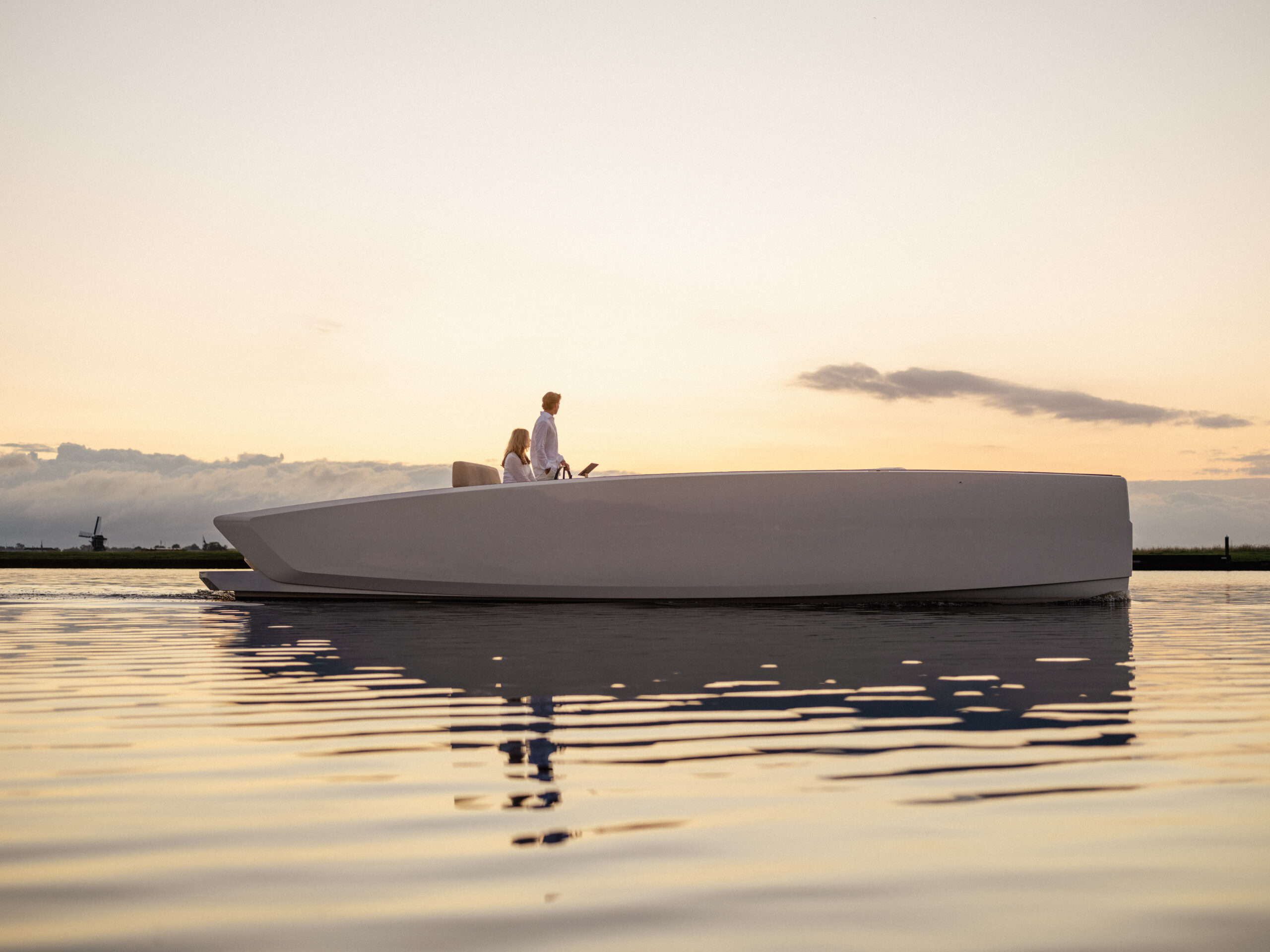
The electric revolution in boating has matured. Here is how to read the landscape — and what genuinely excellent looks like.
No combustion noise, no vibration. Just propulsion that lets you hear the water, the wind, and the people around you.
The finest electric yachts are built to last decades — hand-finished materials, sculpted forms, and engineering that never trades quality for cost.
On protected lakes, inner harbours, and increasingly across European coastal zones, electric is the only sensible choice — and often the only permitted one.
Electric yachting has moved far beyond novelty. What was once a niche conversation between engineers and early adopters has become the dominant direction for premium boat builders across Europe. The reasons are practical and experiential rather than ideological. Once you have spent a full day on a properly engineered electric yacht, returning to diesel feels like a step backward in almost every dimension that matters.
At the premium end of the market, the distinction between electric yachts is not simply battery size or top speed. It is architecture. The best designs treat the drivetrain not as a feature to be added, but as a structural principle — one that reshapes the entire vessel around a quieter, more responsive, more refined experience. Hull geometry, weight distribution, energy management, and interior acoustics all follow from that single commitment.
Range matters, of course. So does charging infrastructure. But what buyers at this level consistently return to is the sensory quality of the experience — the absence of vibration, the directness of throttle response, the way silence transforms the relationship between vessel, water, and the people aboard.
Several builders have established themselves as reference points in the premium electric yacht segment. Each approaches the challenge from a different angle — and understanding those differences helps clarify what to prioritise when choosing a vessel.
The LUMEN E10 is a Dutch-built 10-metre electric yacht designed for owners who want long-range cruising alongside serious interior refinement. Its 100–160 km range and integrated propulsion system reflect a decade of development in electric marine technology, delivered without compromise on the finishes and spatial quality typically associated with vessels at a considerably higher price point.
The Candela C-Series represents a different philosophy — hydrofoil technology that lifts the hull clear of the water at speed, dramatically reducing drag and extending range. It excels in performance-oriented applications and appeals to buyers drawn to technical innovation at the frontier of what is currently achievable.
Silent Yachts have carved out a distinct position with solar-electric catamarans built for bluewater passage-making. Their self-charging capability and offshore-capable design serves a specific buyer — one for whom independence from marina infrastructure is as important as the on-water experience itself.
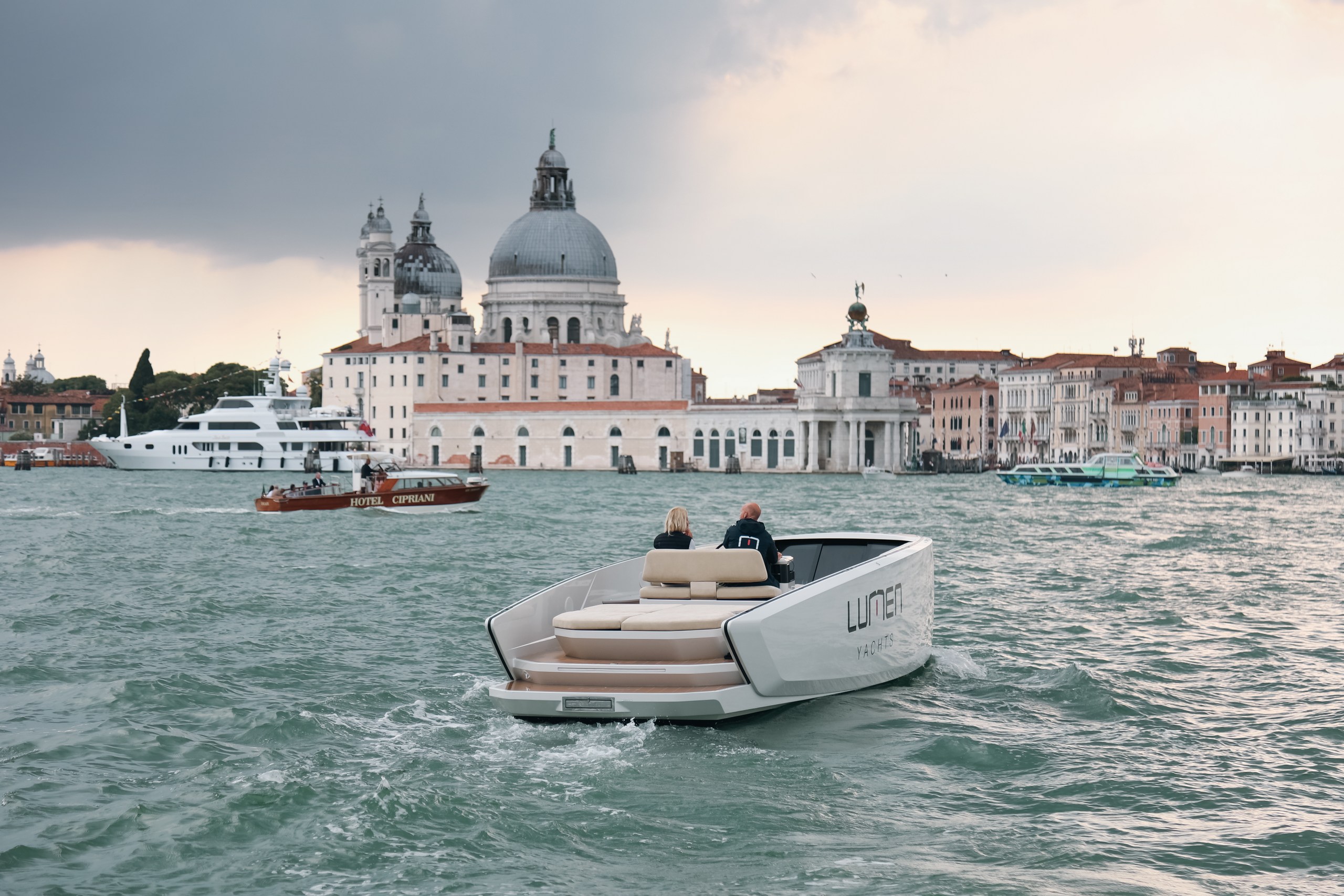
Range anxiety — borrowed from the electric car world — tends to recede quickly once buyers spend time on the water with a well-engineered electric yacht. The usage pattern of recreational boating is fundamentally different from daily road commuting. Most cruises involve a known home berth, familiar destinations, and predictable distances. That structure suits electric propulsion naturally, and in practice most owners find their actual usage rarely approaches the vessel’s range limit.
Range in electric yachts depends primarily on three variables: battery capacity, hull efficiency at cruising speed, and throttle discipline. A vessel like the LUMEN E10, with its optimised semi-displacement hull and high-density battery system, achieves between 100 and 160 kilometres of range — sufficient for a full day of cruising on most European lakes and coastal routes. Overnight charging at a standard marina berth restores full capacity for the following morning.
| Cruising profile | Typical speed | Approximate range |
|---|---|---|
| Relaxed lake cruise | 6–8 knots | 120–160 km |
| Coastal day trip | 8–10 knots | 80–120 km |
| Extended passage | 10–12 knots | 60–90 km |
| Performance cruising | 12+ knots | 40–60 km |
Range figures are indicative and vary based on sea conditions, payload, and battery configuration.
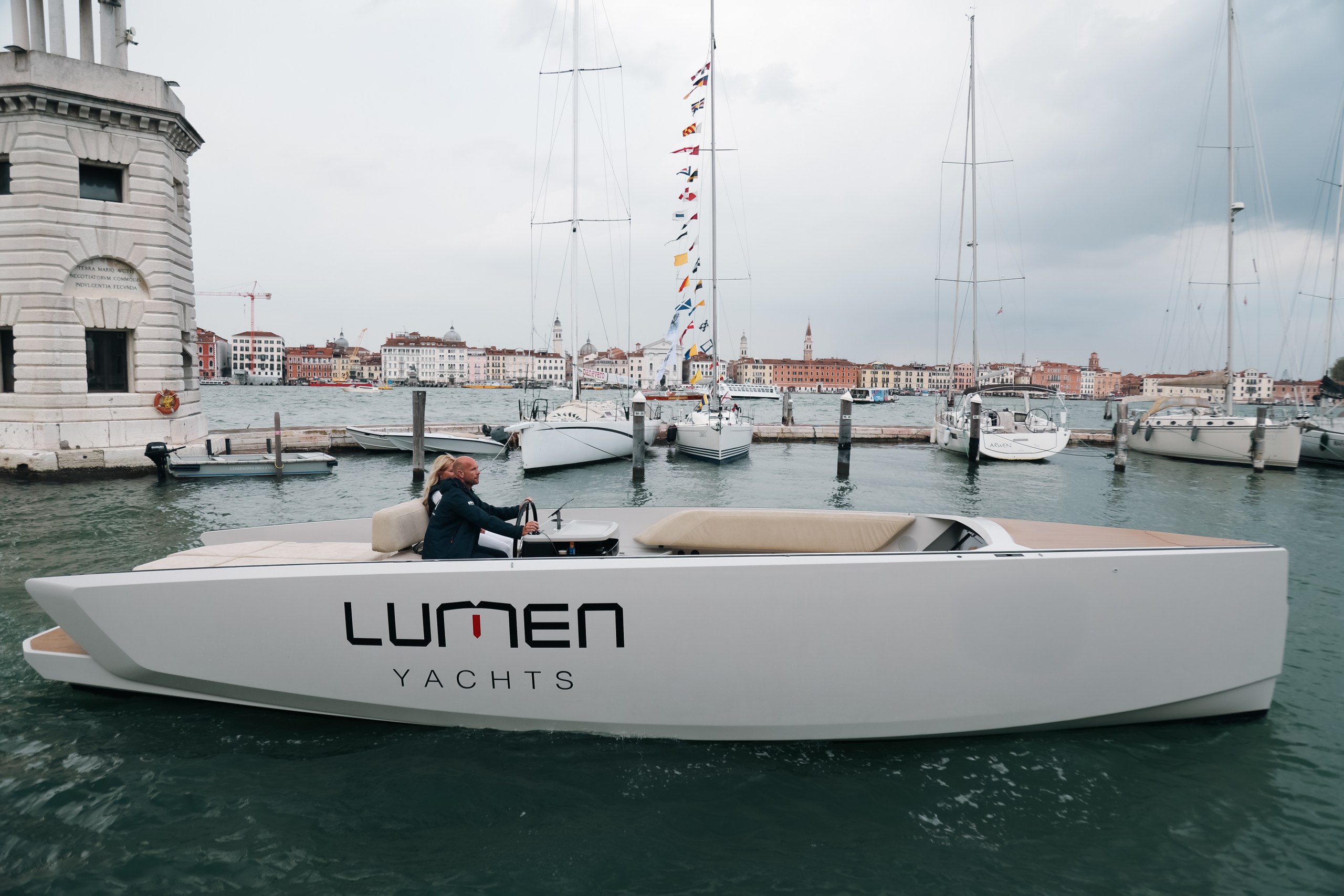
The word luxury is used loosely in boating. At its most meaningful, it describes an experience that feels both effortless and considered — where every material, proportion, and system reflects sustained attention rather than cost reduction or specification padding.
In electric yachts, that standard shows through craftsmanship that withstands close scrutiny — joinery that sits flush, upholstery chosen for durability as much as appearance, deck hardware that operates without play or rattle. It is also expressed through propulsion that responds with precision, and energy systems intelligent enough to balance performance with efficiency without constant input from the owner.
Perhaps more than anything else, genuine luxury aboard an electric yacht is acoustic. A cabin that operates in near-silence at cruising speed transforms the social dynamic of the vessel — conversation no longer competes with engine noise, the water becomes audible, and the experience shifts from transportation to something closer to genuine immersion in the environment you came to enjoy.
Electric yachts and European lake and inland waterway cruising have a natural alignment that goes beyond regulation. The routes are contained, speeds are moderate, and the settings reward the kind of sensory immersion that only silent propulsion provides. Cruising Lake Geneva, Lake Como, or the Netherlands’ network of canals and lakes in a proper electric yacht is a qualitatively different experience from doing so under diesel — quieter, cleaner, and far more connected to the environment the vessel moves through.
Regulatory pressure is also reshaping access. Several of Europe’s most desirable boating destinations have introduced restrictions on combustion engines in ecologically sensitive zones, with others actively developing incentive schemes for zero-emission vessels. Choosing electric today is both a quality decision and a forward-looking one — protecting long-term access to the waters you intend to use most.
Range varies considerably depending on vessel design, battery capacity, and cruising speed. The LUMEN E10 achieves between 100 and 160 km per charge at typical cruising speeds — more than sufficient for a full day on most European lakes and coastal routes. Overnight charging at a standard marina berth restores full capacity.
Electric yachts are permitted — and in some cases actively preferred — on the vast majority of European lakes. Certain protected areas impose restrictions on combustion engines, and electric vessels typically receive unrestricted access. Regulations vary by country and waterway, so confirming local rules before planning a route is always advisable.
Purchase price for premium electric yachts is broadly comparable to diesel equivalents at equivalent specification. Operational costs are substantially lower: electricity costs less per kilometre than diesel, maintenance requirements are reduced without combustion components to service, and insurance costs are increasingly competitive as the technology matures and track record builds.
Focus on range at your typical cruising speed, hull form relative to the waters you intend to use, build quality and finish standards, warranty terms, after-sales service capability, and the manufacturer’s operational track record. Visiting vessels on the water rather than stationary at boat shows gives a considerably more honest picture of how the finished product actually performs and feels.
Ten metres of considered design. Up to 160 km of silent range. Contact us to arrange a viewing or discuss specification.
