

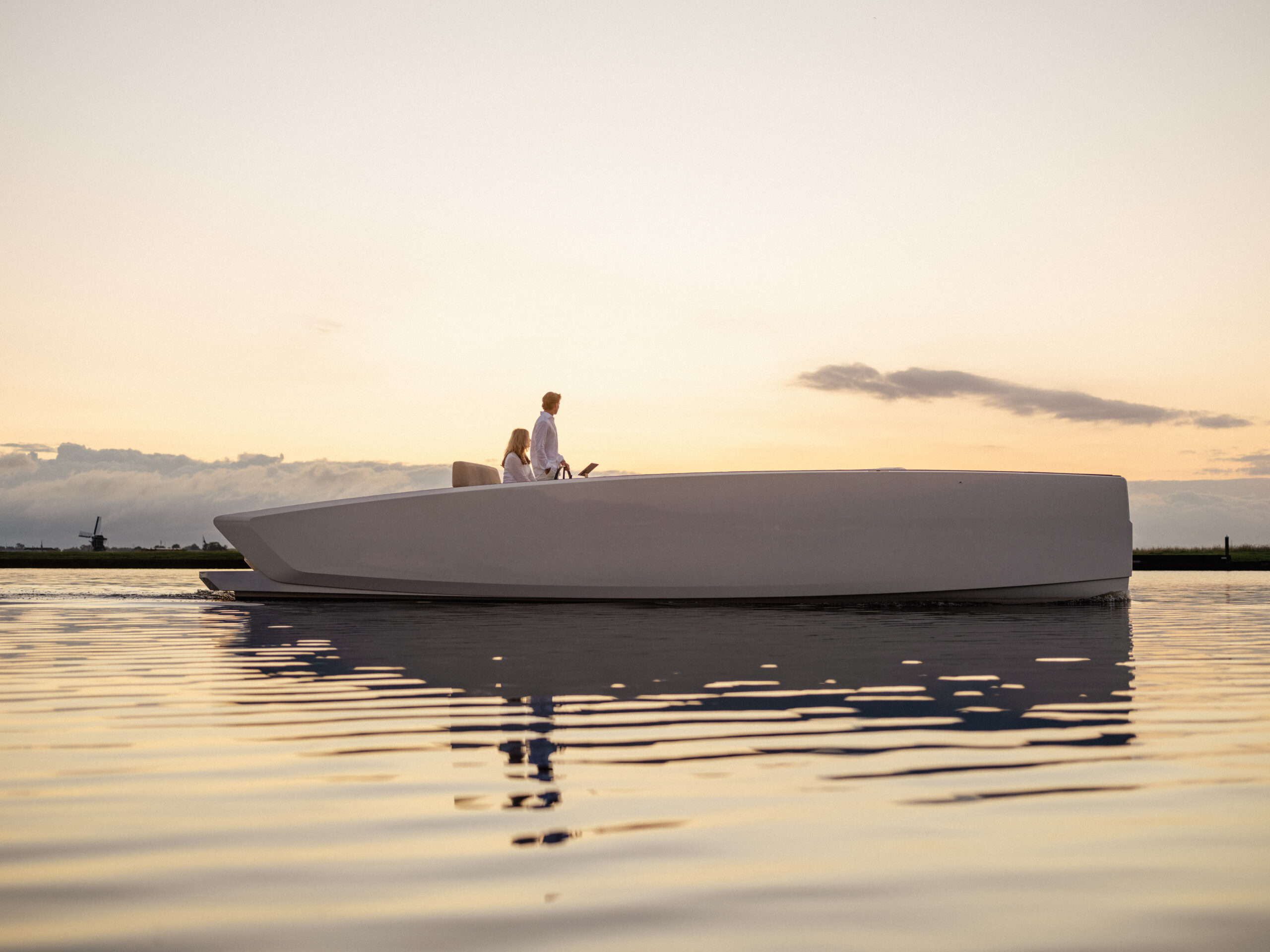
A simple guide to electric yacht propulsion, batteries, charging, and why purpose-built design changes everything.
No fuel, no fumes, and no conventional engine noise.
Integrated energy storage designed for real cruising use.
Hull, battery and drivetrain engineered as one system.
An electric yacht is a yacht powered by an electric propulsion system rather than a petrol or diesel engine. Instead of burning fuel, it uses stored electrical energy from onboard batteries to drive an electric motor, which turns the propeller and moves the boat through the water.
The idea sounds simple, but the quality of execution varies dramatically. Some electric yachts are converted from combustion boats, while others are designed from the start around electric propulsion. That difference matters. A purpose-built electric yacht can deliver better efficiency, better balance, lower maintenance, and a far more refined on-water experience.
The Lumen E10 belongs to that second category. It is engineered from the hull up as an electric yacht, which is why it performs differently from a conventional boat fitted with an electric motor after the fact.
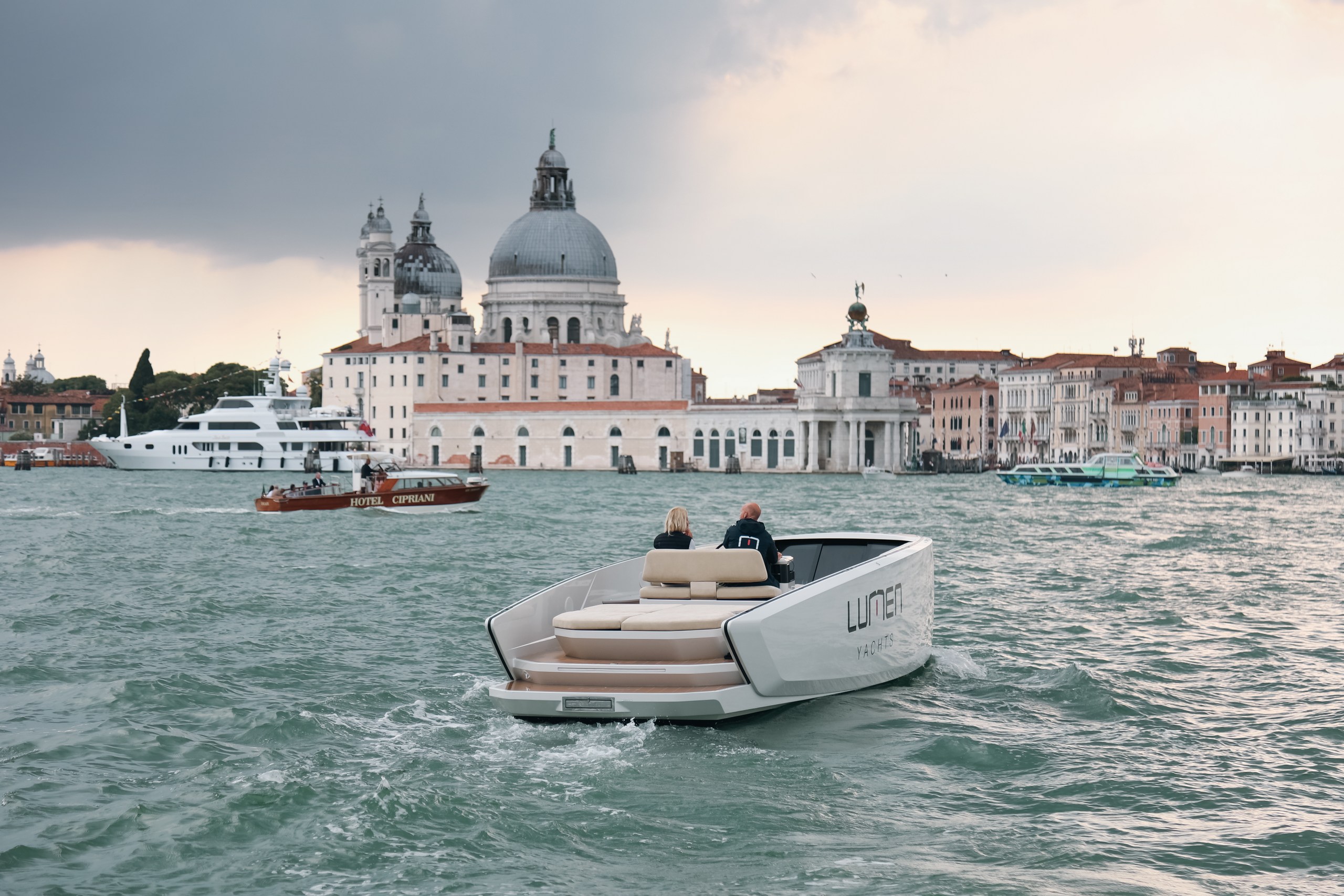
An electric yacht works through three core systems: the battery pack, the electric motor, and the controller. When the skipper applies throttle, the controller regulates how much electrical power flows from the battery to the motor. The motor then converts that energy into torque, spinning the propeller and moving the yacht forward.
Because electric motors deliver torque instantly, the response feels smooth and immediate. There is no gear change shock, no engine vibration, and no exhaust note dominating the experience. That makes electric propulsion especially attractive in premium leisure boating, where comfort matters just as much as performance.
Range in an electric yacht depends on battery size, hull efficiency, speed, weather, and load. A well-designed electric yacht can travel surprisingly far, especially at efficient cruising speeds. The key is not just battery size, but the relationship between the hull and the propulsion system.
The Lumen E10 uses an 81 kWh battery pack and can achieve up to 160 km of range in the right cruising conditions. That makes it suitable for full leisure days on lakes, rivers, and calm coastal waters, while preserving the calm, low-maintenance experience that buyers expect from electric boating.
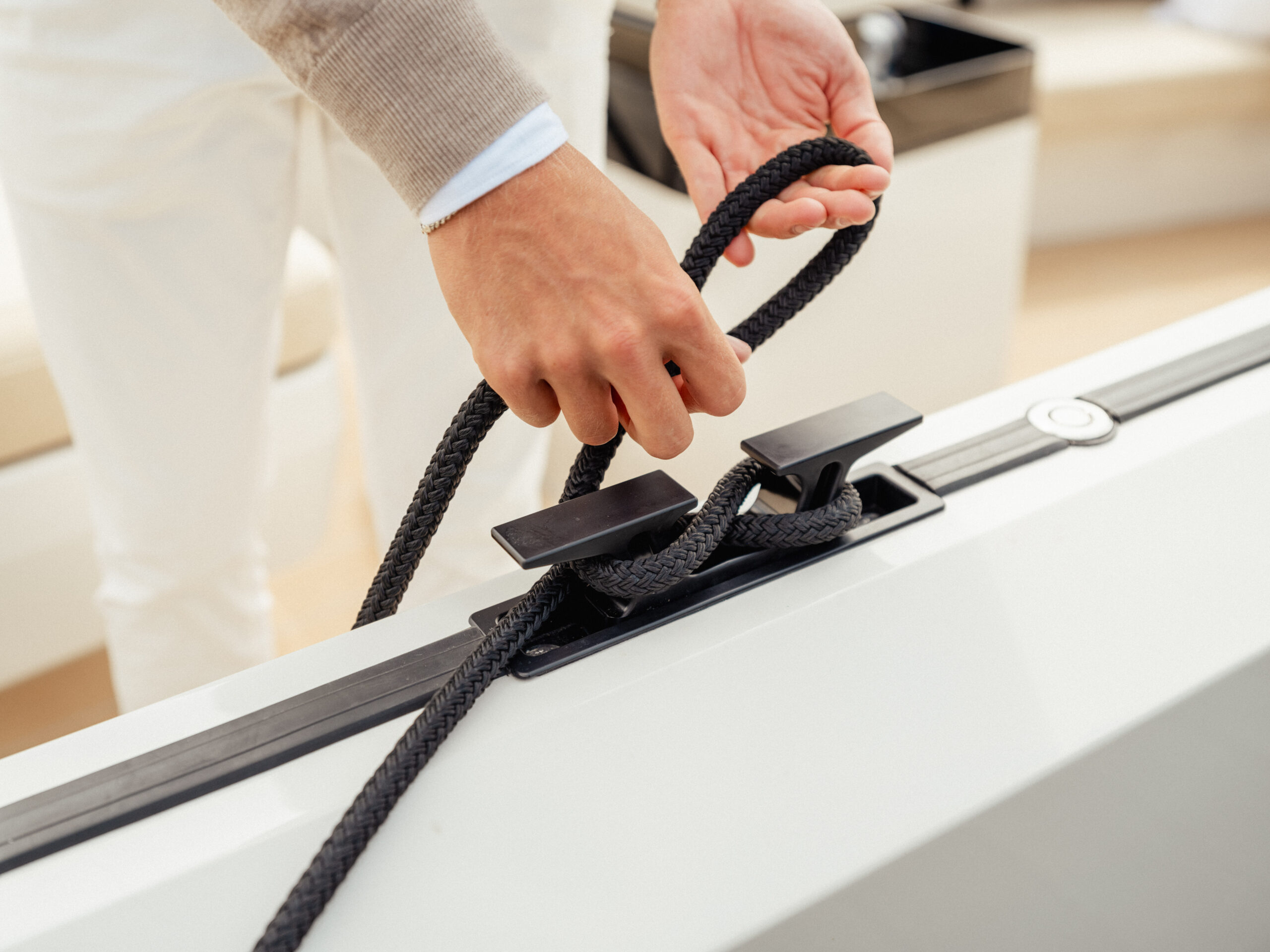
A yacht designed around electric propulsion usually outperforms a converted combustion boat in efficiency, balance, and long-term usability.
| Area | Purpose-Built Electric Yacht | Retrofitted Boat |
|---|---|---|
| Hull efficiency | Optimised for electric cruising | Often designed for combustion power |
| Weight balance | Battery and drivetrain integrated early | Compromised by conversion constraints |
| Range predictability | More consistent and efficient | Can be less efficient in practice |
| Ownership experience | Cleaner, calmer, more refined | Often a technical compromise |

The Lumen E10 shows what happens when electric propulsion is treated as the starting point rather than an afterthought. Its fast-displacement hull, integrated electric drivetrain, long cruising range and Dutch-built premium finish create a yacht that is not only cleaner to operate, but more elegant to own and use.
That matters because the best electric yachts are not just technical statements. They are lifestyle products. Silence, smoothness, ease of use and lower maintenance all become part of the value proposition. The result is a better day on the water, not just a different engine choice.
An electric yacht is powered by an onboard battery pack that feeds an electric motor through a controller. The system replaces the conventional combustion engine and fuel system with a cleaner, quieter electric drivetrain.
Range depends on battery capacity, hull efficiency, speed and load. The Lumen E10 can reach up to 160 km in the right cruising conditions, making it practical for premium day use and inland leisure boating.
Charging time depends on battery size and charger output, but most owners fit charging into a normal marina or home shore-power routine. For more detail, see our charging guide.
Yes. In many ways they are simpler than combustion boats because they have fewer moving parts and no fuel system, exhaust system, oil changes or conventional engine servicing requirements.
A purpose-built electric yacht usually offers better efficiency, more predictable range, cleaner design integration and a more premium overall experience than a retrofit conversion.
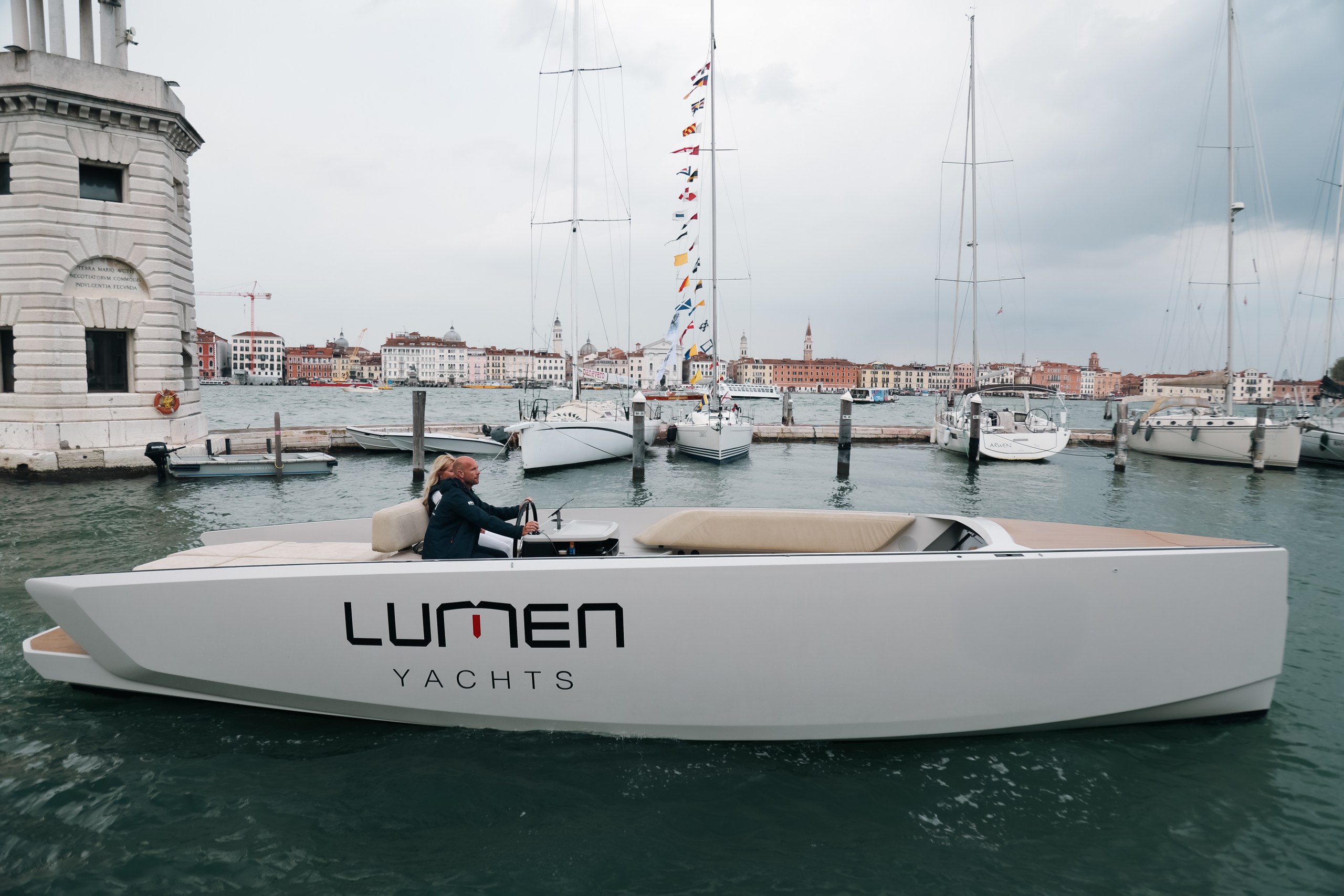
Step aboard the Lumen E10 and feel how silent propulsion, premium design and real electric range come together on the water.
